ARX: arch harnessing agents
While I was reading Clean Architecture, I was also working on a real codebase, so I did the obvious thing and tried to apply the book to it as I went. The idea for ARX came from the metrics the book presents: instability, abstractness, and the distance of a component from the ideal balance between the two. They are numbers that say whether a structure is healthy, and I wondered why nobody was measuring them continuously.
The problem
An AI coding agent optimises for the task in front of it. That is its strength and its blind spot, because architecture is not a property of any single change. It is a property of all the changes together, and it erodes the way a path erodes: one step at a time, no step looking like the problem.
An agent cannot see that drift. Neither, honestly, can a tired human at the end of a sprint.
The idea
ARX analyses a Java or TypeScript codebase against Clean Architecture metrics, and also reads the git history to see how those metrics move over time. That second part is what I find most interesting. A snapshot tells you where you are, but a history tells you which way you are heading, which is the difference between a value and its derivative.
All of it is exposed through an MCP server, so an agent like Claude can ask about the architecture before changing it and check afterwards that it did not make things worse. The aim is a harness that keeps development sustainable in the long term, independently of the business logic being written.
How it grew
- A diagnostic matrix that classifies recurring architectural problems into named syndromes
- The MCP adapter (v1.4.0), and embedded persistence on H2 (v1.5.0)
- Scoped scanning, so a monorepo can be analysed one part at a time
- A retro Win98-style dashboard, because tools can be useful and still have a sense of humour
- A source-available license (FSL-1.1-ALv2)
Some content
The idea started out quite informative, displaying the basic information:
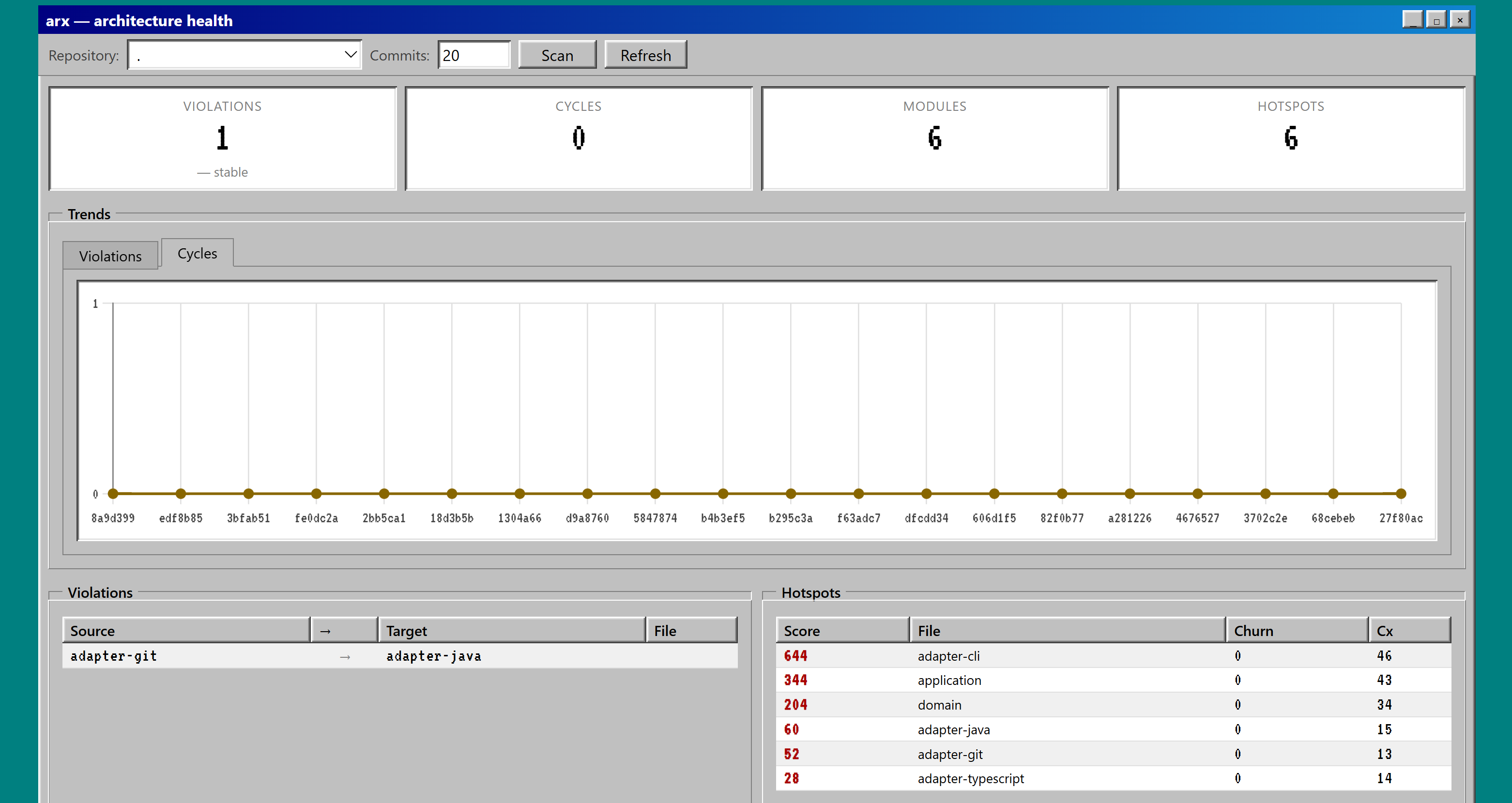
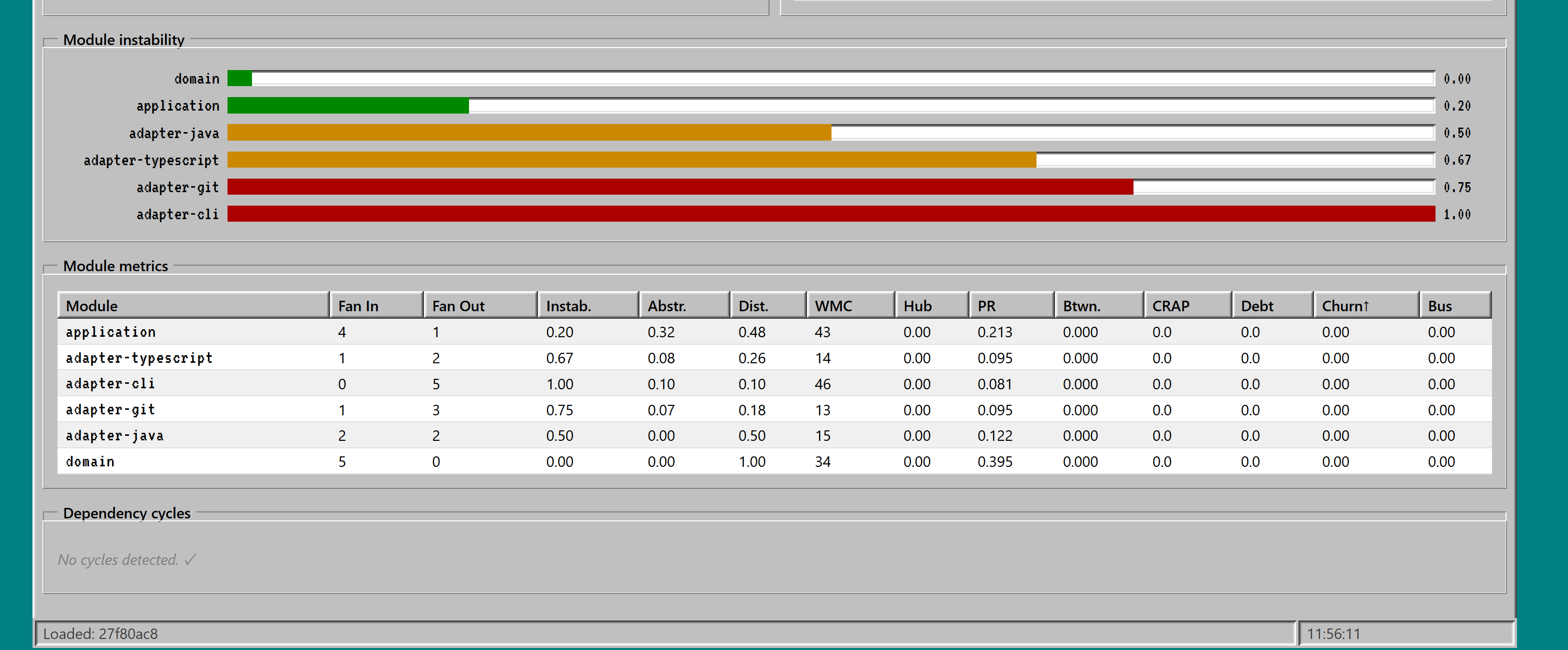
One thing I was for sure missing was the graph signaling the "domain" and the dependence direction each component had. So, setting out for a more modern display, and making use of some js library for drawing graphs (we love deps, don't we...), a clear representation of the components was achieved!
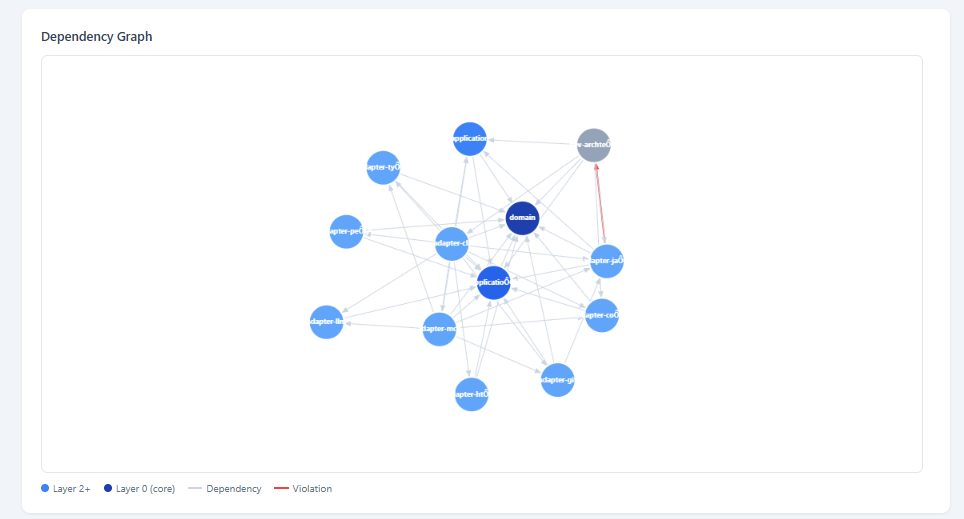
As you see, Claude had helped me tons, but had violated the structure by introducing a transitive dependency looping back to a never-ending circle (which was detected by some smart Tarjan graph algorithm I'd love to read more about).
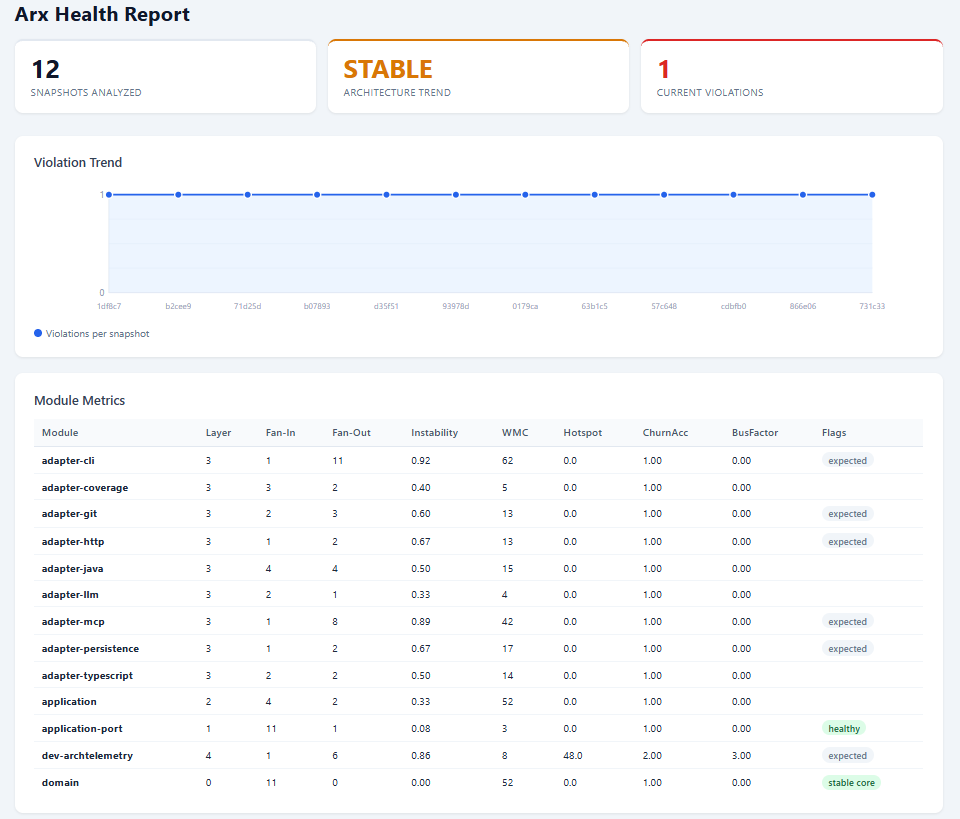
Moving on, I felt like the amount of metrics overwhelmed me, so I decided I needed to synthetize everything. After presenting it to the CTO and discussing the project with some other colleague, I got the idea of producing, so called, diganostics: The metrics can mean different completely different things depending on the purpose of the component they are describing. A domaing layey should be stable. An adapter should be thin. Etc... So I made a table with a combination of spectrums for each type of onion-component, assigning a diagnosis to each one:
A design question I keep thinking about
Metrics are proxies, and a proxy under pressure gets gamed. Tell an agent to satisfy a number and it will satisfy the number, sometimes in ways that miss the point of it. So the guardrail has to show direction and diagnosis rather than only a pass or fail score, which is part of why the history matters.
Verdict
ARX started as a way to take a book seriously, and it turned into an argument: if software is going to be written faster than anyone can review it, then the architecture has to be something that can be checked by machines too.